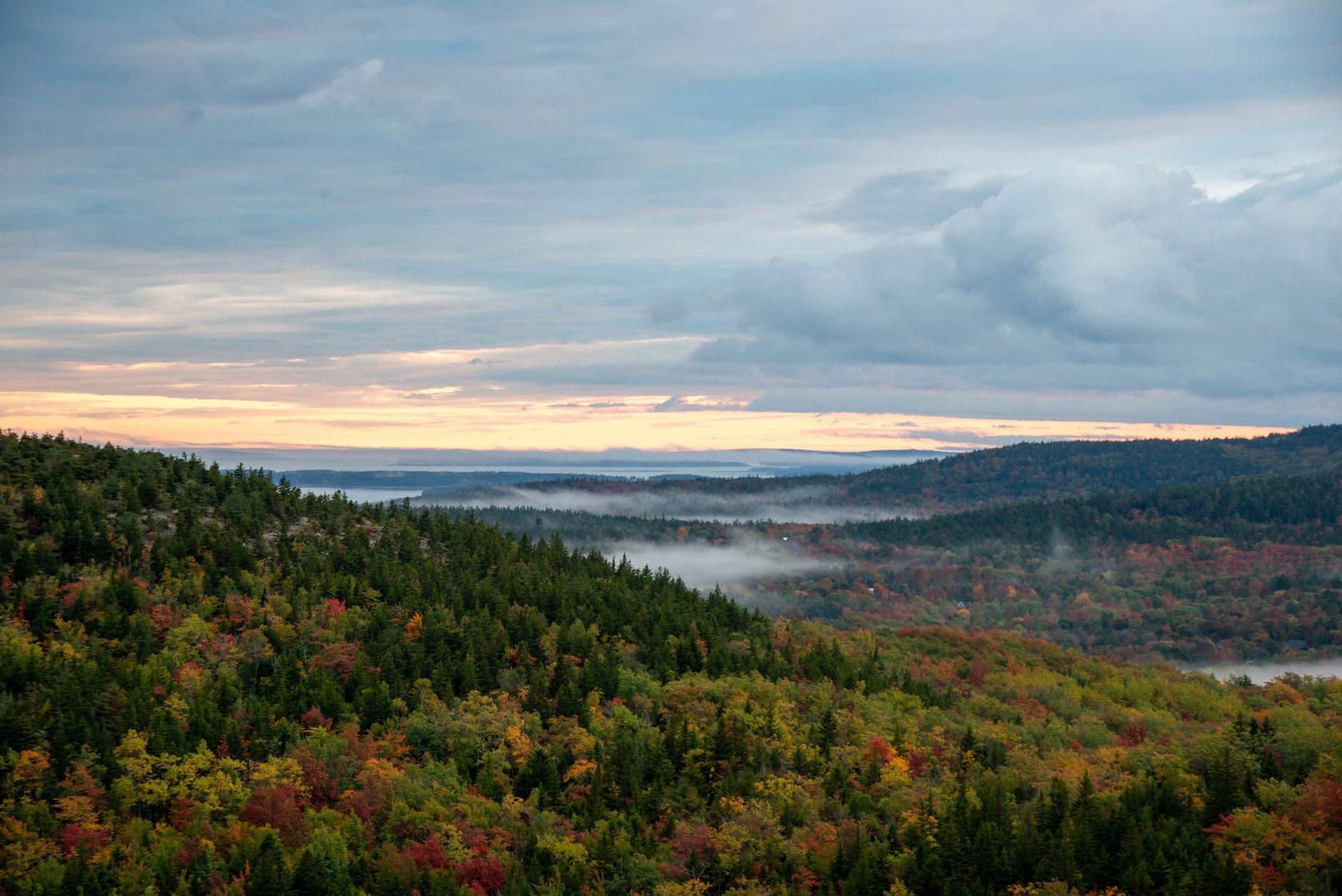
Mount Desert Island turns red and gold every October, but Acadia's fall runs longer and more layered than one postcard week. Peak color typically lands somewhere between the first and third week of October, while September stays green and quiet and November strips the trees bare under a colder sky. Get the timing wrong and you'll either hit a park still dressed for summer or one already locked down for winter.
This guide runs through the dates and numbers that actually matter: when the leaves turn, what the weather does to your plans, which hikes and drives make the most of the color, and the fees, reservations and closures that catch fall visitors off guard. For a broader look at choosing between seasons, our season-by-season guide covers how fall stacks up against summer and winter.
When to Visit Acadia for Peak Fall Foliage
The National Park Service won't commit to a single date, because it can't: peak color lands anywhere from the first to the third week of October depending on that year's rain and temperatures. Historically the sweet spot sat around Columbus Day weekend in mid-October. In 2022 and 2023 it landed close to October 15-20, and the long-term trend keeps sliding later — Acadia's best foliage weekend now runs about two weeks behind where it sat in 1950, a function of warming autumns rather than a quirk of any single year. Book flexible, or book late.
September belongs to shoulder season. Trees stay mostly green at sea level, though maples at higher elevation on Cadillac and Sargent Mountain start flashing orange by mid-month. Crowds and prices drop noticeably from the August peak while the park still runs full services — a good trade if color isn't the top priority.
Early-to-mid October is the traditional target. Maine's statewide fall foliage report, updated weekly, and the NPS park weather page are the two sources worth checking before you lock in dates, since the color front moves through the state north to south and inland to coast. Late October and November bring bare branches, dropping temperatures, and the closures covered below — still worth a trip for quiet trails and low light, just don't expect much color on the trees by Halloween.
Color doesn't arrive at once because Acadia isn't one forest. Maples and birches turn first, usually at higher elevations where nights cool faster; oak, beech and tamarack hold their color into late October, and the Gulf of Maine's moderating effect keeps coastal areas a week or two behind inland slopes. Red spruce, an evergreen, makes up 47% of the park's live trees, so even at peak Acadia never turns into a solid wall of color — it's dark conifers threaded with pockets of red and gold. Much of that color comes from birch and aspen that colonized more than 17,000 acres burned in a 1947 wildfire on Mount Desert Island, the kind of fast-growing tree that dominates a burned landscape for generations.
What Fall Weather Actually Feels Like
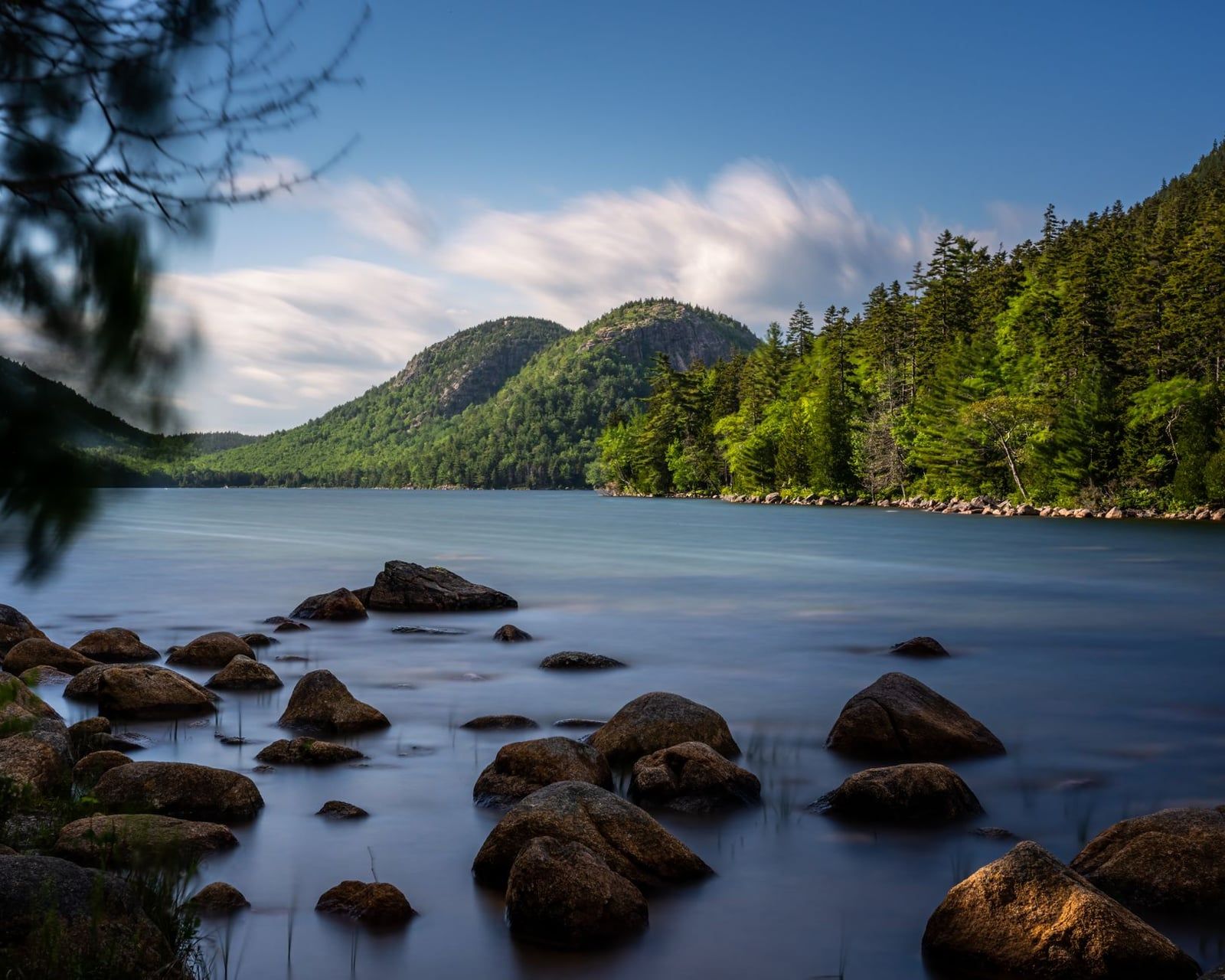
September still feels like summer's tail end, with highs near 70°F and lows in the 50s. By October the average high drops into the 50s°F with lows in the 40s, and November turns genuinely cold, with highs near freezing on some mornings. The table below rounds out the typical range.
| Month | Avg High | Avg Low | What to Expect |
|---|---|---|---|
| September | 68°F | 52°F | Warm days, cool evenings, still summer-like |
| October | 55°F | 43°F | Crisp days, cold mornings, frequent rain |
| November | 45°F | 34°F | Cold, short days, early snow possible |
October is also one of Acadia's rainier months — one longtime visitor logged rain or fog on nearly half the days of a three-week October stay. Fog rolls off the Gulf of Maine fastest along the coast, so a socked-in Sand Beach morning can clear into a sunny afternoon on Cadillac. Check the forecast the night before and build a rain-day backup into your itinerary rather than hoping the sky cooperates.
Cadillac Mountain's summit runs several degrees colder and windier than the coast, which matters most for sunrise-watchers standing around in the dark. Pack real layers: a base layer, a warm packable jacket, a waterproof shell, and a hat and gloves for anyone chasing sunrise above treeline. Sturdy boots matter too — granite gets slick when wet, and October's rain makes that a near-daily concern.
Crowds, Cruise Ships & Fall vs. Summer
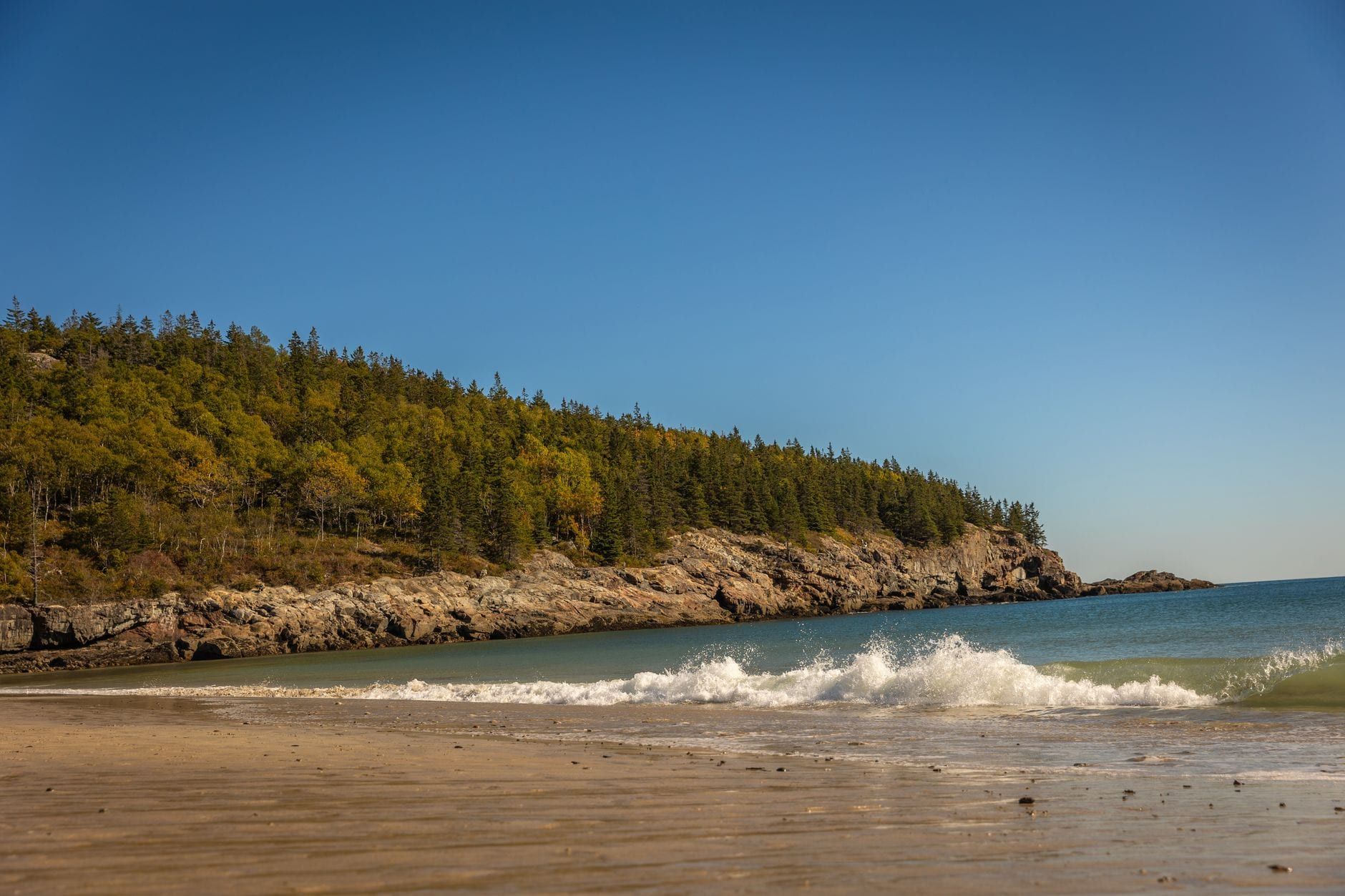
Fall is quieter than Acadia's June-through-September peak, but quieter doesn't mean empty. Sand Beach, the Beehive trailhead and the Cadillac summit road still draw crowds through mid-October, especially on weekends when the foliage headlines are running. October also brings a wave of autumn cruise ships into Bar Harbor, and a single ship can drop several thousand day-trippers onto the same trails and restaurants you're aiming for.
The trade-off favors fall anyway. Temperatures suit hiking better than August's humidity, the biting flies are long gone, and the Precipice Trail — closed for most of the summer to protect nesting peregrine falcons — typically reopens by fall, putting a serious iron-rung climb back on the table. For a fuller list of fall-friendly activities beyond hiking, see our guide to things to do in Acadia.
Set against that: weather turns unpredictable fast, hours shrink at exactly the businesses you'll want after a long hike, and Cadillac sunrise reservations get harder to land the closer you get to the late-October cutoff. Show up at trailheads before 9am or after 4pm to dodge the worst of it. The fare-free Island Explorer shuttle, which links Bar Harbor with Jordan Pond, Sand Beach, Sieur de Monts and the Park Loop Road stops, keeps running into fall and takes the parking-lot roulette out of the equation entirely.
Best Hikes for Fall Foliage
Acadia has over 150 miles of hiking trails, and the fall payoff varies a lot depending on effort. Here's a shortlist sorted by difficulty rather than an exhaustive trail dump, so you can match a route to your legs and your tolerance for exposure.
Easy walks: Jesup Path and Jordan Pond Path
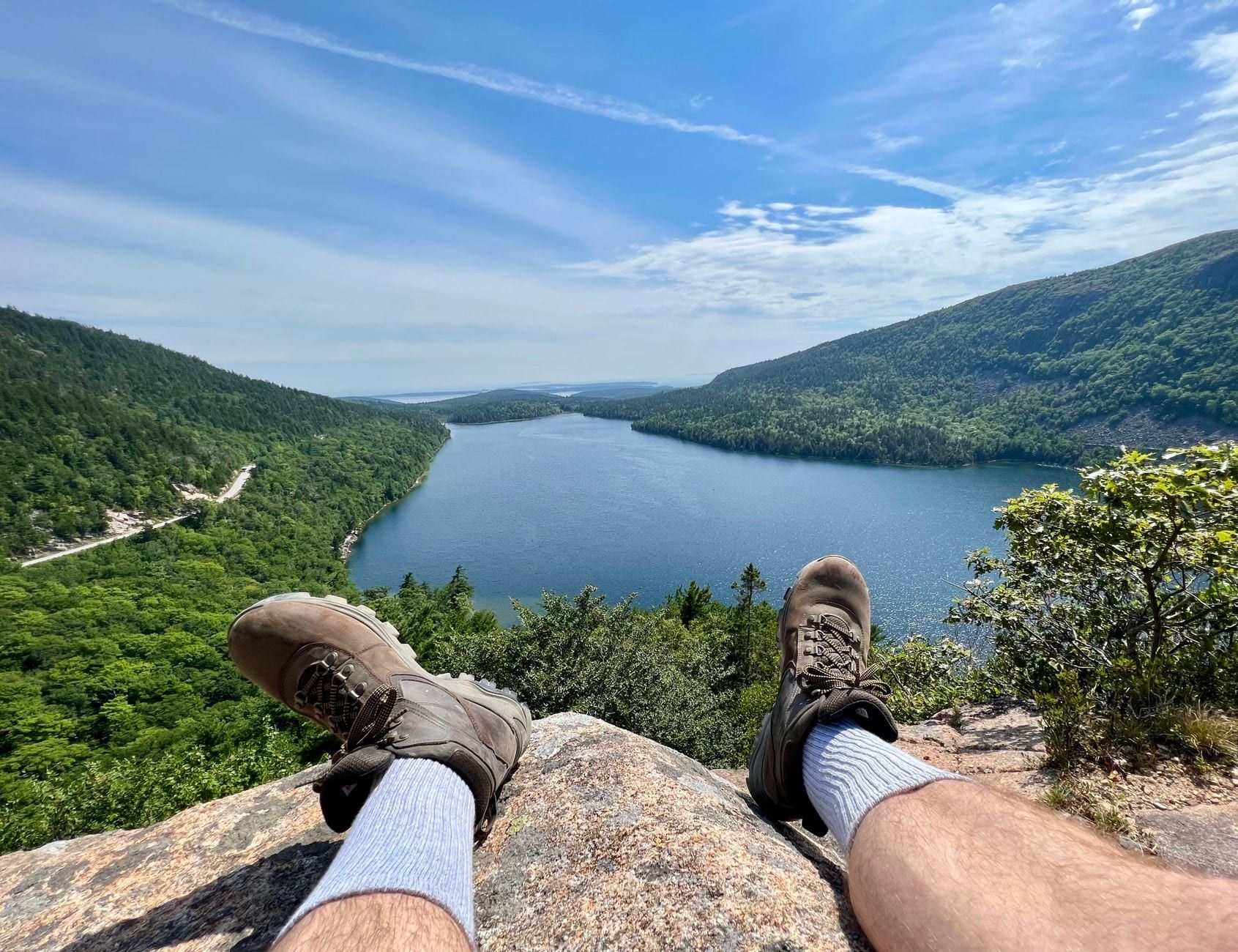
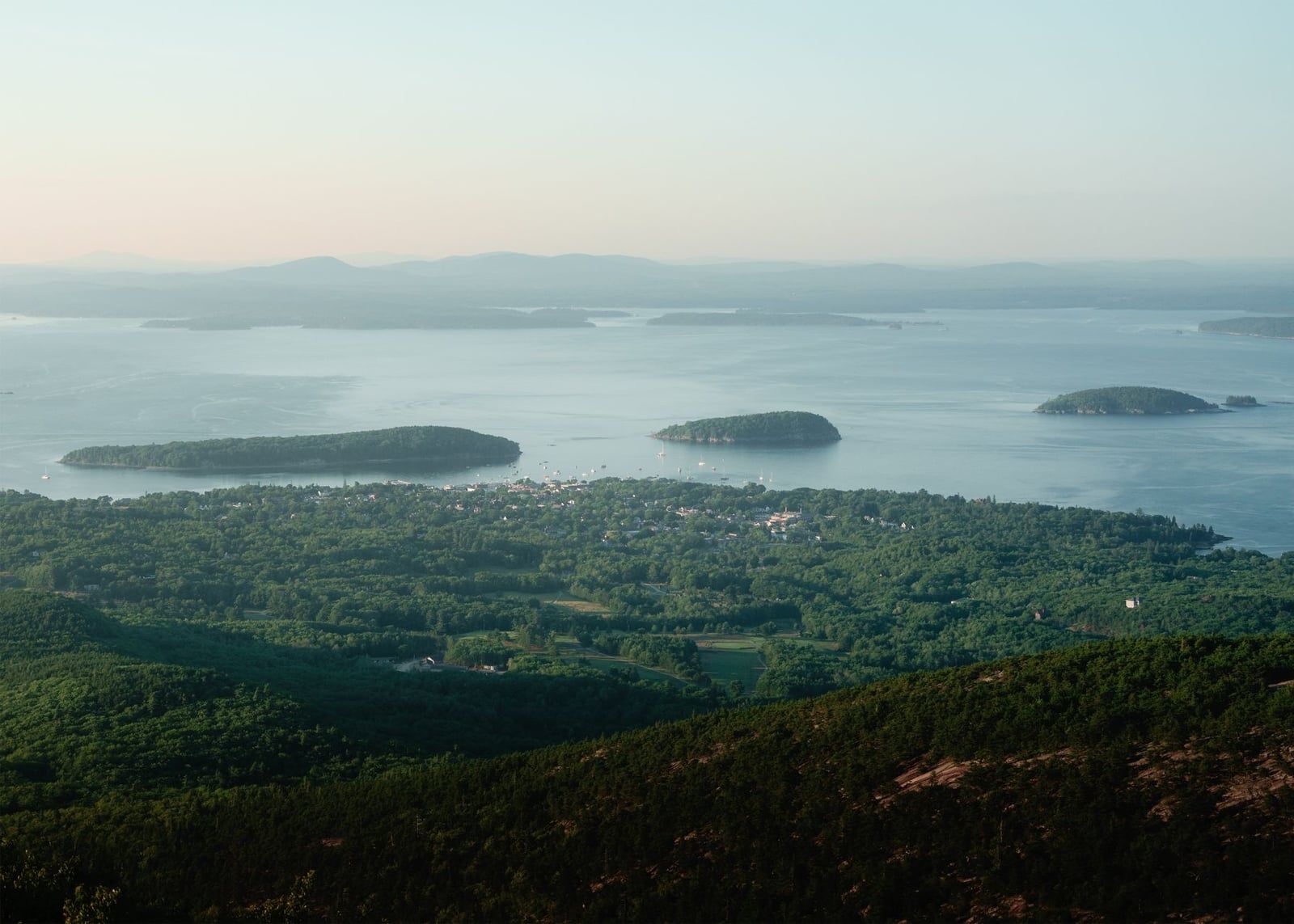
Jesup Path is a wooden boardwalk through a birch grove near Sieur de Monts, flat enough for strollers and wheelchairs, and one of the easiest spots to stand inside a wall of yellow leaves. Jordan Pond Path circles the pond on a mostly flat 3.3-mile loop, framed by the twin granite domes of The Bubbles, and ends conveniently at Jordan Pond House for popovers. Neither trail demands more than sneakers, which makes both good picks for families or anyone skipping the iron rungs.
Moderate hikes: The Bubbles and Gorham Mountain
The Bubbles-Nubble Loop climbs two rounded granite summits above Jordan Pond with views back over the water and its fall-colored shoreline, a couple of hours round trip with some scrambling near the top. Gorham Mountain Loop, on the park's east side, gains modest elevation for open ledges looking straight down the coast — a good mid-morning hike once the fog burns off. Both suit hikers who want more than a flat path but aren't ready for ladders.
Strenuous climbs: Beehive and Precipice
Beehive Loop Trail runs about 1.4 miles with roughly 450 to 500 feet of elevation gain up iron rungs bolted into open granite — hike it counter-clockwise so you're climbing the rungs, not descending them with a drop below your heels. Precipice Trail, at about 2.1 miles and 1,059 feet of gain, is steeper and more exposed again, must be climbed clockwise, and should be skipped entirely in rain or on wet rock, since a slick iron rung at that angle is a real hazard. Both close seasonally for falcon nesting and reopen in fall; check current status before you drive out. Acadia's east side, where both trails sit, tends to have the more dramatic unobstructed foliage views from open summits, while the west side stays calmer and less crowded but still colorful. For a fuller trail-by-trail rundown across every skill level, our hiking guide covers all of Acadia's 158 miles of trail.
Best Scenic Drives and Easy Viewpoints
Not every fall visitor wants to hike for their color, and Acadia doesn't demand it. Four routes cover most of what a trail would show you, minus the elevation gain.
Park Loop Road
Park Loop Road is a 27-mile route touching Acadia's best-known stops — Sieur de Monts, Sand Beach, Thunder Hole, Otter Point and Jordan Pond — and takes about two to four hours with stops for photos and short walks. The stretch between Cadillac Mountain and Jordan Pond runs one-way, so plan your loop direction before you set out rather than doubling back. Prefer not to drive it yourself? A guided bus tour covers the same stops without the parking hunt, and a self-guided audio tour narrates each overlook at your own pace if you'd rather stay behind the wheel.
Cadillac Summit Road
The summit road climbs to 1,530 feet, the highest point on the U.S. Atlantic coast, through tight switchbacks closed to RVs, trailers and anything over 21 feet long. Views run 360 degrees over Frenchman Bay and the outer islands, and in fall the color below stretches out in a way no trailhead photo captures.
Schoodic National Scenic Byway
Schoodic is the only section of Acadia on the mainland rather than Mount Desert Island, reached by a roughly hour-long drive from Bar Harbor. Its 27-mile scenic byway loops the peninsula past pink granite shoreline with a fraction of the traffic found on the island side — the pick for anyone who's done Park Loop Road once already and wants the same coastline without the crowds.
Carriage roads by bike
Acadia's carriage roads run 45 miles through the forest past 17 hand-cut granite bridges and stay closed to cars entirely; construction began in 1915 under John D. Rockefeller Jr., and the surface is still crushed rock, smooth enough for road bikes and mountain bikes alike. Riding them in fall means threading color at ground level with none of the road-traffic stress of Park Loop Road. Rental shops in Bar Harbor and Northeast Harbor keep bikes through the season, or book ahead with a dedicated bike tour that handles the route planning.
Cadillac Mountain Sunrise & Vehicle Reservations
From roughly October 7 through early March, Cadillac Mountain is the first place in the continental United States to see the sunrise — exactly why its summit parking lot fills with headlamps and thermoses well before dawn on clear fall mornings.
Driving up requires a separate $6 vehicle reservation booked through Recreation.gov, required from about May 20 through October 25. Reservations get scarcer as that cutoff nears, since everyone wants the last few weeks of both foliage and the early-sunrise window at once — book as early as the release window allows rather than waiting for a good forecast. Once the reservation requirement ends for the season, no booking is needed to drive up at all, and the road stays open to vehicles until its typical December 1 closure.
No car? No reservation needed either way — hiking or biking to the summit skips the booking system entirely, though it's a real climb either route. The Island Explorer doesn't serve the summit road, so shuttle riders will need to hike, bike, or drive their own vehicle for sunrise.
Fees, Passes & Fall Closures Timeline
A standard 7-day private vehicle pass costs $35 and covers everyone in the car; a per-person pass for those arriving on foot or bike is $20, free under 16; an annual Acadia-only pass runs $70, and the America the Beautiful annual pass, good at any federal site, costs $80. Non-US residents 16 and older pay an additional $100 nonresident fee. Veterans Day, November 11, is one of the year's fee-free entrance days — worth timing a trip around if the numbers matter to you. Full current pricing lives on our hours and fees page.
Fall closures come in a rough sequence, and missing one can wreck a day's plan.
| What Closes | Typical Date |
|---|---|
| Seawall & Schoodic Woods campgrounds | Around October 13 |
| Blackwoods Campground | Around October 20 |
| Main visitor center (Hulls Cove) | November 1 (Bar Harbor Chamber of Commerce takes over ranger info after) |
| Cadillac Summit Road reservation requirement | Ends around October 25; road stays drivable, unreserved, after |
| Park Loop Road & Cadillac Summit Road to vehicles | Around December 1 |
Whale-watching and boat tours out of Bar Harbor typically wind down in early October too, ahead of the campgrounds. None of these dates are fixed by law — an early snowstorm can push a road closure up by weeks — so check nps.gov the week before a late-fall trip rather than trusting last year's calendar.
Where to Stay and Eat in Fall
Bar Harbor puts you within walking distance of the park entrance and the Island Explorer's stops, at a price premium that peaks right alongside foliage season. Staying outside the island in Trenton or Ellsworth typically runs cheaper and adds only 20-30 minutes of driving each way — a reasonable trade if you're not planning pre-dawn Cadillac trips, less so if you are. October fills up fast: book lodging months ahead, not weeks.
Restaurants and shops thin out as October runs long. Many Bar Harbor businesses close for the season by the second half of the month, well ahead of the November visitor-center shutdown, and lodging and dining options both narrow sharply once November arrives. Lobster pounds and other seasonal seafood spots mostly wrap up by mid-October — if a lobster roll on a dock is part of the plan, don't push the trip past the first couple weeks of the month.
Jordan Pond House is the one dining stop worth building a hike around: popovers and tea served on the lawn with The Bubbles across the water, a tradition that predates the park itself. Get there outside the noon rush, since even in shoulder season the wait can run long on a clear October Saturday. For more on the town itself and day-trip options from it, our Bar Harbor tour guide rounds out the options once you've settled where you're staying.
FAQ
What is the best week to see fall foliage in Acadia National Park?
Historically the second to third week of October, though the National Park Service says peak can fall anywhere from the first to third week depending on the year. That window has drifted about two weeks later than it sat in 1950, so checking Maine's weekly foliage report before locking dates pays off.
Is Acadia National Park crowded in the fall?
Yes, though less than the June-through-September peak. October still draws heavy crowds, including day-trippers off autumn cruise ships docking in Bar Harbor, so early starts and the Island Explorer shuttle make a real difference.
Do I need a reservation to drive up Cadillac Mountain in the fall?
Yes, a $6 vehicle reservation through Recreation.gov is required through about October 25. After that cutoff you can drive up with no booking at all, and hiking or biking to the summit never requires a reservation.
What should I pack for Acadia in the fall?
Layers: a base layer, a warm packable jacket, a waterproof shell, and a hat and gloves for cold mornings on Cadillac's summit. Rain gear matters most in October, one of the park's wetter months, and sturdy boots handle wet granite better than trail runners.
Are Acadia's campgrounds open in the fall?
Most close by mid-to-late October: Seawall and Schoodic Woods around October 13, Blackwoods around October 20. There's no winter camping inside the park.
How much does it cost to enter Acadia National Park?
A standard 7-day private vehicle pass is $35, a per-person pass without a vehicle is $20, and an America the Beautiful annual pass covering every national park costs $80.
Is September or October better for visiting Acadia?
September brings milder crowds, warmer weather, and mostly green trees with color just starting at elevation. October delivers the peak color but with cooler temperatures, more rain, and heavier crowds — pick September for calm, October for the color.
What closes first in Acadia as fall goes on?
Whale-watching and boat tours wind down in early October, campgrounds follow by mid-to-late October, the main visitor center closes November 1, and Park Loop Road and Cadillac Summit Road close to vehicles around December 1.