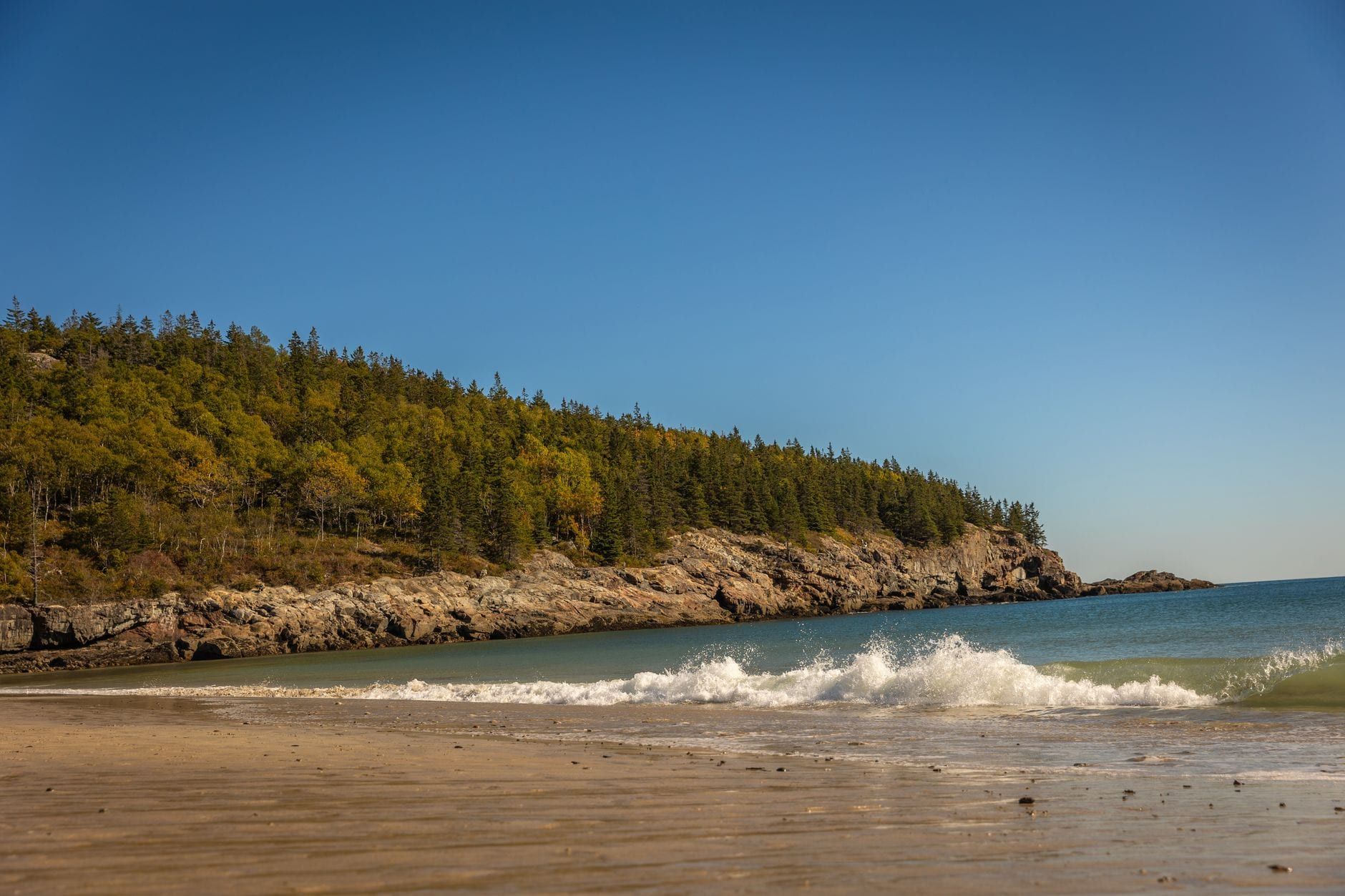
Acadia packs some of the East Coast's best granite scrambling, sea-cliff walking, and pond-side ambling into a park you can cross end to end in under an hour. Most trails run under three miles, but the elevation gain often comes in short, steep bursts over bare rock instead of long switchbacks, so a "short" Acadia hike can still leave your legs burning by the top. This guide sorts the park's best routes by difficulty, so you can build a day, or three, around what you actually want: a boardwalk a toddler can manage, a ladder that makes your palms sweat, or something in between.
How to Pick Your Acadia Hikes
More than 150 miles of trail lace Mount Desert Island, but don't let the mileage fool you. The National Park Service groups routes into three types: summit climbs, coastal walks, and lake-and-forest paths, and nearly all of them are short. What sets Acadia's hiking apart is the rock itself: bare pink granite, often at an angle, sometimes fitted with iron rungs bolted straight into the cliff face. A 1.5-mile loop can gain 500 feet and take two hours (for the park's bigger picture on layout and history, see our Acadia overview).
Trails also link up constantly, so don't treat them as isolated out-and-backs. Gorham Mountain's ridge flows south into Ocean Path. Beehive's summit trail drops into the Bowl and connects to Gorham. Jordan Pond Path ties into carriage roads circling beneath The Bubbles. Stack two or three short routes into one loop instead of driving between separate trailheads — it's how most experienced Acadia hikers actually spend a day here.
- One day, first visit: Jordan Pond Path, Ocean Path, and the Cadillac Summit Loop cover the classics with zero scrambling.
- Two to three days: add Gorham Mountain, The Bubbles, and Beech Mountain for real elevation without exposure.
- Thrill-seekers: Beehive and Precipice deliver the iron rungs, if the season and weather allow.
- Crowd-avoiders: Acadia Mountain, Beech Cliff Ladders, and the Schoodic Peninsula see a fraction of the traffic.
The sections below run flattest to steepest, then branch into special-interest picks and the fees, shuttle, and safety details you need before lacing up. If you'd rather let someone else handle the logistics, Acadia's guided tour options cover many of these trails without the trailhead-hunting.
Best Easy Hikes in Acadia (Families, First-Timers, Limited Time)
These five routes deliver Acadia's signature scenery, granite coast, glacial ponds, mountaintop views, for minimal climbing. They're the right call with kids, tired legs, or only a few hours before your ferry or flight.
1. Jordan Pond Path
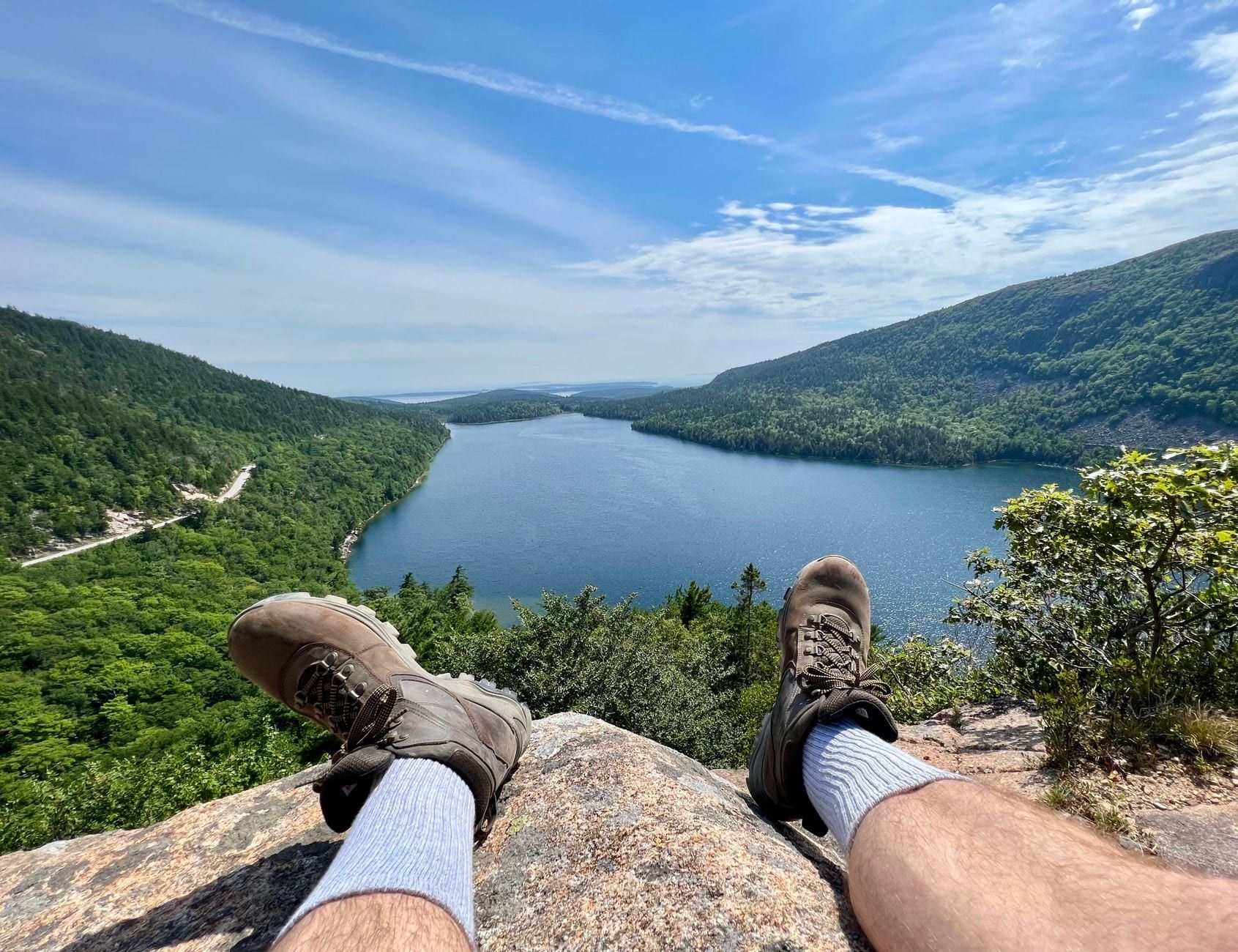
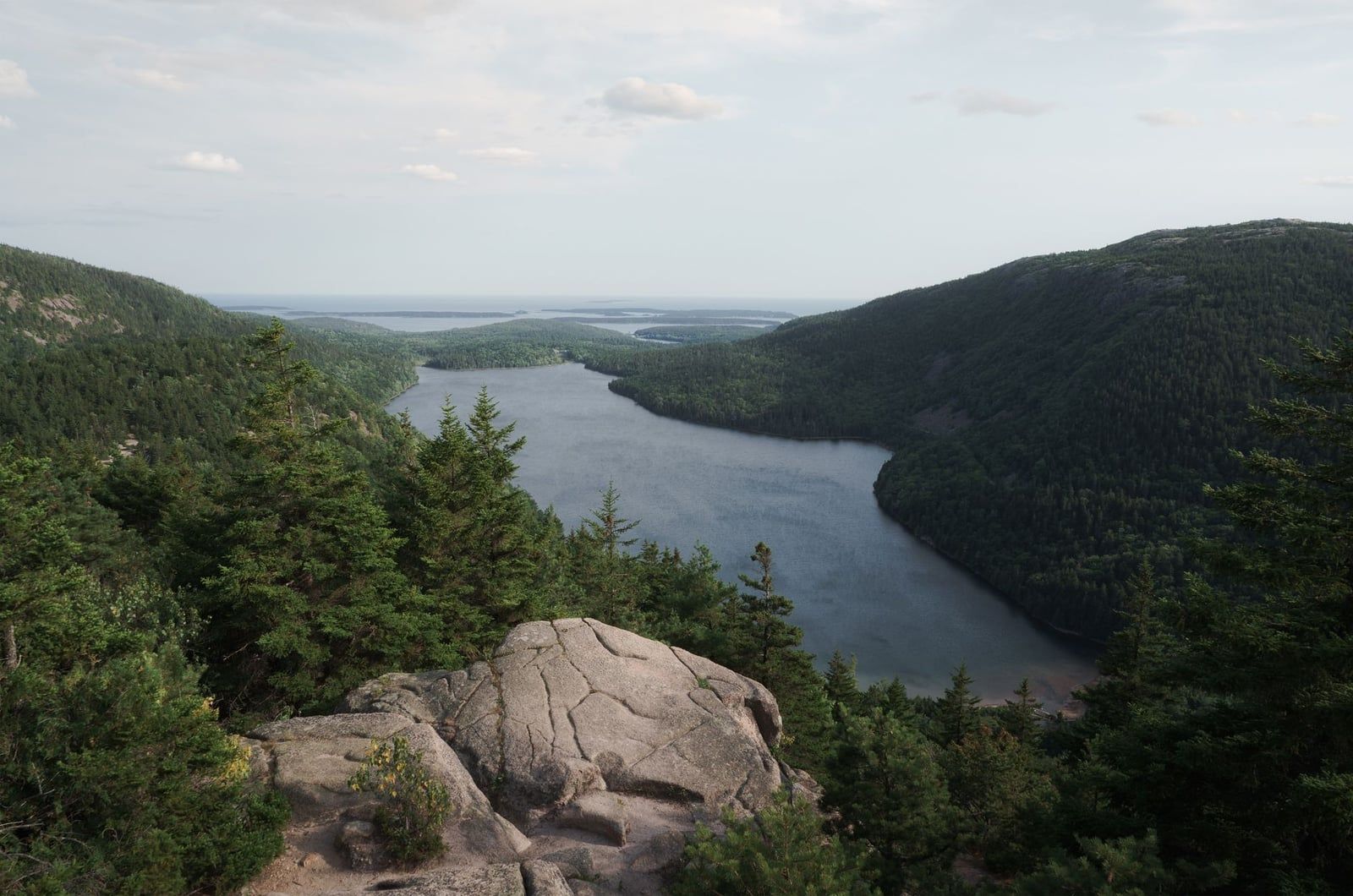
The 3.3-mile loop around Jordan Pond stays nearly flat, gaining only about 100 feet as it circles the water on boardwalk planks and packed gravel. The reward comes partway around: Jordan Pond's blue-green water framed by the twin granite domes of The Bubbles, a view that shows up on half of Acadia's postcards. Finish at the Jordan Pond House for popovers and tea on the lawn — arrive by early afternoon in July or August, or the wait stretches past an hour.
2. Ocean Path
Ocean Path runs about 2.2 miles one-way, 4.4 round trip, between Sand Beach and Otter Point, tracing the coast along low cliffs with the water almost always in sight. Thunder Hole sits roughly at the halfway mark, a narrow granite slot where incoming swell compresses and lets out a boom with spray up to 40 feet. Time it one to two hours before high tide for the full effect. The path is mostly flat gravel and packed dirt, though a few sections drop close to the rocks.
3. Cadillac Summit Loop
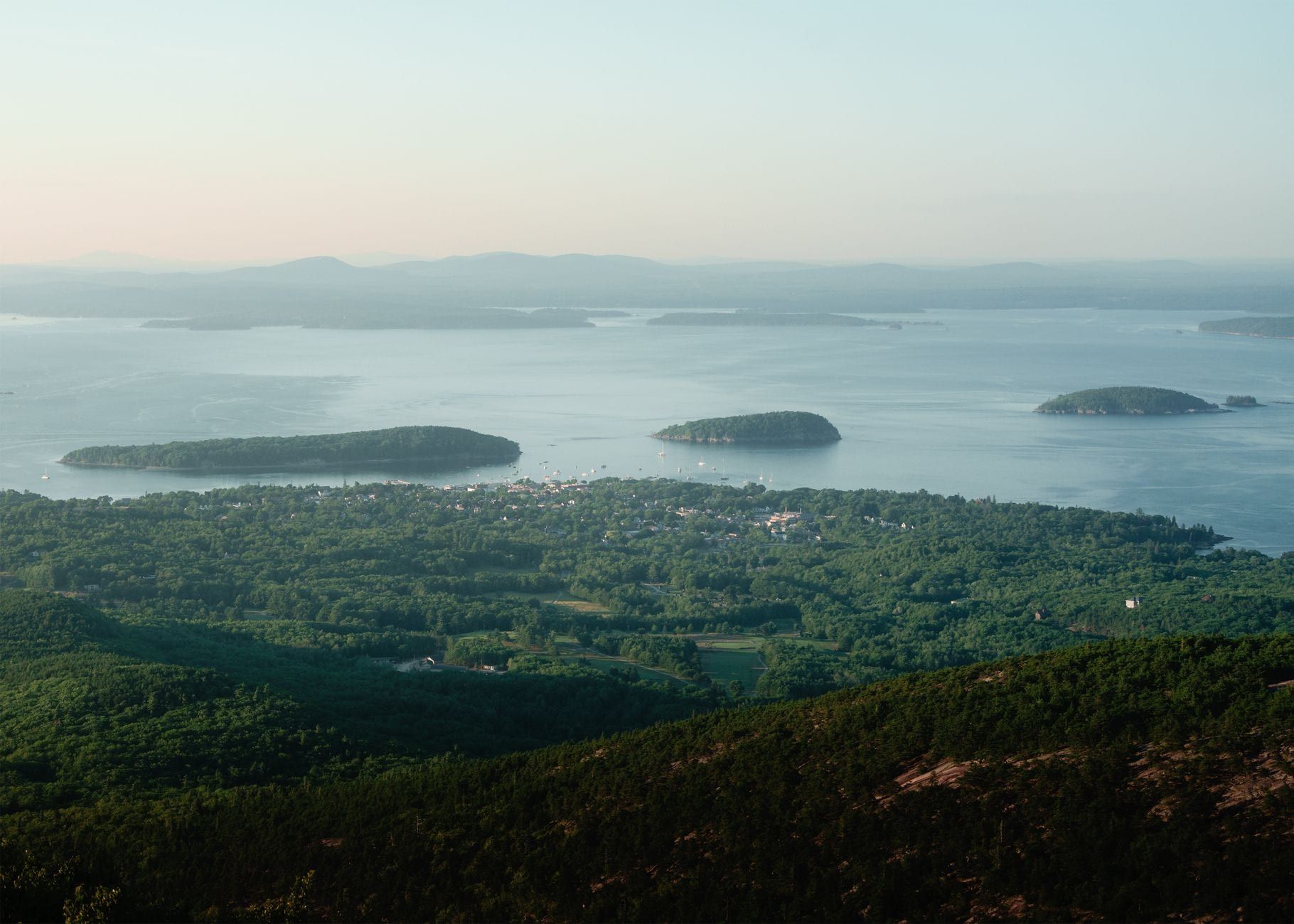
The paved, half-mile loop around Cadillac Mountain's summit needs almost no fitness at all — most visitors drive up and walk it in twenty minutes. At 1,530 feet, it's the highest point on the U.S. Atlantic coast, with 360-degree views across the islands of Frenchman Bay. From early October through early March, Cadillac's summit is one of the first places in the country to see sunrise, and a timed vehicle reservation is required to drive up between roughly May 20 and October 25. Book it on recreation.gov before you arrive, not from the parking line.
4. Great Head Trail
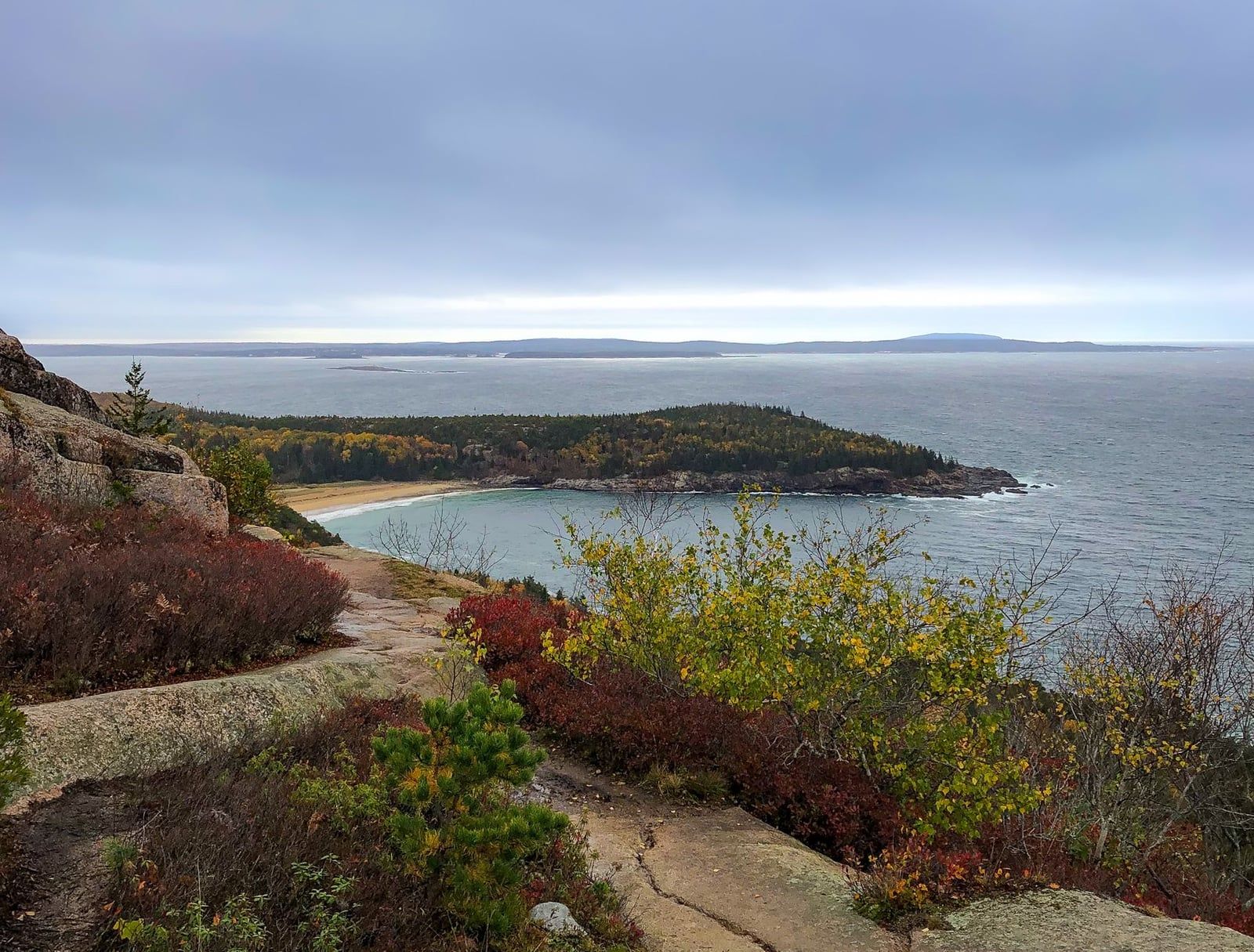
This 1.6-mile loop climbs a granite headland just beyond Sand Beach, easy enough for most hikers despite a few short rocky scrambles. From the top you look back down on Sand Beach's pale crescent and out toward Egg Rock lighthouse. Start from the far end of the Sand Beach parking area rather than the beach itself, and you'll skip most of the crowds still setting up towels.
5. Bass Harbor Head Light (bonus)
It's less a hike than a short walk, but the path out to Bass Harbor Head Light earns its spot on any easy-hike list. Built in 1858 and still the only lighthouse inside Acadia, it perches on a rock ledge on the island's quieter southwest side, about 30 to 40 minutes' drive from Bar Harbor. Go for sunset, when the light and the surf both do their best work, and keep to the marked overlooks — the rocks below are slick and it's a short drop.
Best Moderate Hikes (Great Views Without Extreme Exposure)
Step up from flat paths and you get real elevation, an hour or two of climbing, and a summit view, without any ladders or rungs. These four are the sweet spot for a fit hiker who wants to feel it in their legs but doesn't want their palms sweating on an exposed edge.
1. Gorham Mountain Loop
Gorham's loop covers about 1.6 miles and climbs roughly 400 to 430 feet up open granite slabs with ocean views for most of the ascent. It links directly to Ocean Path at its base and to the Bowl and Beehive trails near its summit, so a short loop can turn into a longer one on the fly. Go up via the Cadillac Cliffs side trail for a rock-tunnel scramble near the start, then finish along the open ridge.
2. The Bubbles (South Bubble)
South Bubble runs about 1.5 miles round trip from the Bubbles Divide trailhead, gaining roughly 500 feet to a summit famous for Bubble Rock, a boulder the size of a car left balanced on the cliff edge by a retreating glacier. The view looks straight down onto Jordan Pond and across to Sargent and Penobscot Mountains. Parking at Bubbles Divide is minimal and fills early on weekends — walk in from the Jordan Pond House lot if you arrive after 9am.
3. Beech Mountain Fire Tower Loop
This 1.2-mile loop gains about 350 feet and is the only Acadia hike ending at a fire lookout tower, still standing above the trees on the island's quieter west side. Climb the tower stairs for a view over Long Pond and the western hills that most Cadillac-bound visitors never see. It's short enough to pair with Acadia Mountain in the same afternoon.
4. Acadia Mountain Trail
Acadia Mountain runs about 2.5 miles round trip with roughly 700 feet of elevation gain, steeper and rockier underfoot than the other moderate hikes here. The payoff is a view straight down Somes Sound, the narrow saltwater inlet splitting Mount Desert Island in two, with far less foot traffic than Cadillac or Gorham. This is the pick for a hiker who wants a workout and some quiet on the same trail.
Best Hard & Iron-Rung Hikes (Beehive, Precipice & Co.)
These are the trails everyone means when they ask about Acadia's ladders: exposed granite faces with iron rungs bolted into the rock, no room for a fear of heights, and real consequences for a slip. Get a taste on Beehive before committing to Precipice, and skip all of them if the rock is wet.
1. Beehive Loop Trail
Beehive climbs about 1.5 miles round trip and gains roughly 500 feet, but the numbers undersell it. Iron rungs, narrow ledges, and a couple of exposed scrambles make this feel far harder than its stats suggest. It's commonly used as a warm-up for Precipice, and it's popular enough that you may queue behind other hikers on the rungs during summer weekends. Dogs aren't allowed here at all, rungs included.
2. Precipice Trail
Precipice is Acadia's hardest and most exposed hike: about 2.1 to 2.3 miles round trip, but with roughly 1,050 feet of elevation gain packed into that short distance, climbing Champlain Mountain's sheer east face on iron rungs and open ledges. Skip it if you're a nervous first-time scrambler, hiking with a young kid, or facing rain — wet granite turns the rungs treacherous. It also closes seasonally, typically from around March 1 into mid-summer, to protect nesting peregrine falcons, usually reopening by mid-August. Check the park's current trail status before you plan around it.
3. Beech Cliff Ladders & Canada Cliffs Loop
This 1.8-mile loop is Acadia's quieter iron-rung option, climbing a series of short ladders up Beech Cliff before circling back along Canada Cliffs with views over Echo Lake. Traffic here is a fraction of what you'll find at Beehive, the pick for hikers who want the rung experience without a line forming behind them. Like the other ladder trails, dogs are not permitted.
4. Jordan Cliffs Trail
Jordan Cliffs is the scramble people mention once they've already done Beehive and Precipice and want something less crowded, tracing exposed ledges above Jordan Pond with cable handholds at the steepest spots. It closes on the same seasonal schedule as Precipice to protect nesting peregrine falcons, so check conditions before a spring visit. Treat it with the same respect as Precipice — the exposure is comparable, the crowds are not.
None of these four are for everyone, and that's fine. Skip them if you're afraid of heights, hiking with young kids, dealing with a knee or shoulder that doesn't like scrambling, or facing wet or icy rock — conditions turn these from thrilling to genuinely dangerous. Federal rules also keep pets off every ladder trail in the park, leash or no leash.
Best Hikes for Special Interests
Not every Acadia hiker is chasing a summit. If your priority is quiet, a dog-friendly trail, or the best foliage color, here's the shortcut.
- Quietest trails: Beech Mountain, Acadia Mountain, Beech Cliff Ladders, and Schoodic's Sundew Trail.
- Dog-friendly on a 6-ft leash: Ocean Path, Gorham Mountain, and Jordan Pond Path.
- No dogs allowed at all: Beehive, Precipice, and Beech Cliff Ladders.
- Best fall foliage: Jordan Pond, South Bubble, Beech Mountain, and Beehive.
One more restriction worth knowing: Sand Beach itself bans dogs outright from June 15 through September 8, regardless of leash. For real solitude, cross Frenchman Bay to the Schoodic Peninsula, the only part of Acadia connected to the mainland rather than an island. It sees a fraction of Mount Desert Island's traffic, with pink granite shoreline and quiet forest trails near the Schoodic Institute. It's worth the roughly hour-long drive once you've hit the big-name trails and want a look at Acadia without the crowds — see our complete activity guide for what else is out there beyond hiking.
Practical Planning: Fees, Parking, Shuttle & Safety
Get the logistics right and the hiking takes care of itself. A standard vehicle pass costs $35 and covers everyone in the car for 7 days; hikers arriving on foot or bike pay $20 each, and an annual Acadia pass runs $70. Non-U.S. residents aged 16 and up owe an extra $100 per person unless they carry an annual or America the Beautiful pass. Buy your pass online through recreation.gov or the NPS site before you arrive — several fee locations don't take cash. Check current opening hours and fees before you go.
Driving to Cadillac's summit needs a separate $6 timed vehicle reservation, booked on recreation.gov, roughly May 20 through October 25. It sets an entry window, not a departure time, and sunrise slots fill up weeks ahead in summer and fall.
The fare-free Island Explorer shuttle runs roughly mid-June through mid-October and reaches most major trailheads, including Sand Beach, Jordan Pond, and the Bubbles Divide area, though it skips Beech Cliff Ladders and the Precipice lot. Staying in Bar Harbor without a car, it's the easiest way to string together two or three trailheads in a day, and pairs well with a guided option like tours departing right from Bar Harbor on days you'd rather not manage it yourself. For getting to the island in the first place, see our directions and transport guide.
Parking lots at Sand Beach, Thunder Hole, and Cadillac fill by mid-morning through summer, so start before 8am or after 5pm if you want an actual spot. Skip the park's free handout map beyond Jordan Pond and Ocean Path — a proper topographic trail map, sold at the park bookstores, marks junctions the handout leaves out. Wear real hiking shoes, carry water even on short routes, and turn back from any rung trail the moment the rock looks wet. Bikes and horses aren't allowed on hiking trails, and there's no backcountry camping anywhere in the park.
When to Hike Acadia's Trails
Season changes which trails are open and how comfortable they are, more than it changes which trails are worth doing. Late August through mid-October is the best window: the worst of the summer humidity and fog has passed, crowds thin out after Labor Day, and by mid-October the maples and blueberry barrens along the trails turn genuinely vivid colors. Plan around our season-by-season guide for the exact foliage timing. Summer (June through August) keeps every trail open but brings the year's biggest crowds and the most parking-lot frustration, and it's around when Precipice typically reopens after its seasonal closure. Spring means mud, blackflies from mid-May into mid-June, and closures on Precipice and Jordan Cliffs while peregrine falcons nest, though the trails that stay open are close to empty. Winter, December through March, shuts down most park roads, visitor centers, and campgrounds, and ice makes the exposed rungs genuinely unsafe — check nps.gov for current conditions before driving up. Most visitors give the park three to four days, enough for an easy day, a moderate day, and one hard hike with a rest built in.
Frequently asked questions
What is the most popular hike in Acadia National Park?
Beehive Loop Trail is the one most often ranked at the top on hiking apps, thanks to its iron rungs and short, punchy climb. Precipice Trail is the more famous name overall, mostly for its reputation as the park's most exposed and difficult route.
How many days do you need to hike the best trails in Acadia?
The National Park Service says the average visit runs three to four days, and that's about right for hiking too: one day for the easy classics, one for moderate summits, and one for a hard iron-rung trail if conditions allow.
Is the Precipice Trail in Acadia dangerous?
It's the park's most demanding hike, about 2.1 to 2.3 miles round trip with roughly 1,050 feet of gain on iron rungs and exposed ledges. Skip it if you're afraid of heights, hiking with young kids, or facing wet or icy rock, and check ahead since it closes seasonally, roughly March into mid-summer, for peregrine falcon nesting.
What is the easiest hike in Acadia National Park with the best views?
Jordan Pond Path and Ocean Path are both flat, short, and deliver classic Acadia scenery for minimal effort. For a big view with almost no walking at all, drive up and do the paved half-mile loop at Cadillac Mountain's summit instead.
Are dogs allowed on Acadia's hiking trails?
Yes, on a 6-foot leash, on most trails and the carriage roads. They're banned outright on the ladder trails, Beehive, Precipice, and Beech Cliff Ladders, and from Sand Beach between June 15 and September 8.
Do you need a reservation or pass to hike in Acadia?
You need a park entrance pass year-round, $35 for a standard 7-day vehicle pass. A separate $6 timed vehicle reservation is required only if you're driving, not hiking, up Cadillac Summit Road, roughly May 20 through October 25.
When is the best time of year to hike in Acadia National Park?
Late August through mid-October, for the best combination of mild weather, thinner crowds, and fall color. Spring brings mud and seasonal closures on the cliff trails for peregrine nesting, and blackflies peak from mid-May into mid-June.
Can you hike in Acadia without a car?
Yes. The free Island Explorer shuttle runs roughly mid-June through mid-October and serves most major trailheads, though it skips Beech Cliff Ladders and the Precipice parking area, so you'll need another way to reach those two.